A Matrix
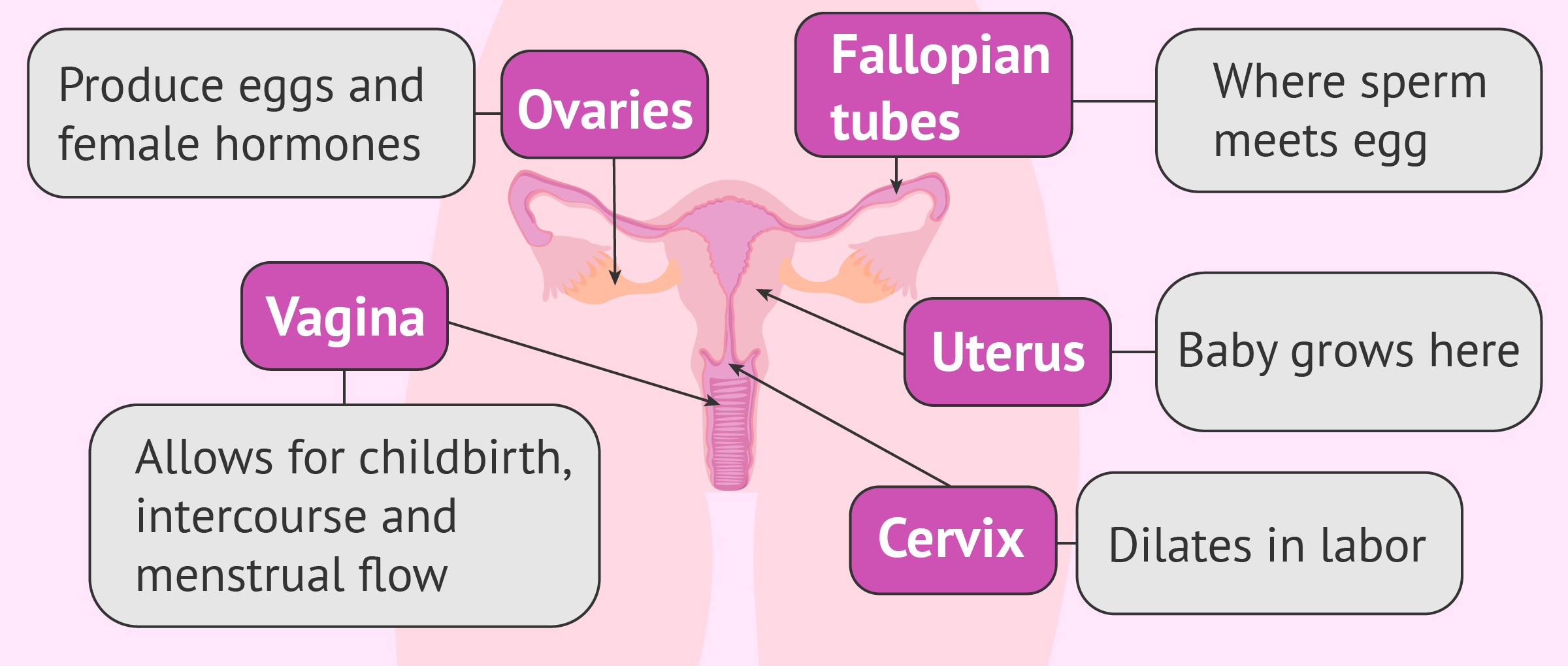
The womb is a vital organ, primarily found in feminine mammals, and plays a critical role in reproduction. It's a fibrous structure located in the lower body, accountable for harboring a forming offspring during gestational period. Beyond gestation, the matrix also discards its mucosa during the menstrual cycle, which is a natural occurrence in a woman's life. Its contour is usually inverted pear-like, and this structure can expand considerably to contain a full-term offspring.
Exploring The Ovaries
The reproductive organs are essential components of the female reproductive system, primarily accountable for producing eggs and chemical messengers. Typically, individuals have two reproductive structures, found on either side of the uterus. They undertake a significant function throughout a woman's life, starting with development during fetal periods and continuing through cycles and potentially into this life phase. Their sophisticated functions are deeply connected with the broader health and well-being of a woman.
Delving into Salpingian {Tubes
Oviduct ducts are vital structures of the female's procreative apparatus, playing a significant role in conception. They extend from the womb to the egg sacs, acting as a pathway for the oocyte to travel from the ovarium to the matrix. Frequently, conception takes place within the ampulla, a defined area of the oviduct tube. Additionally, infection or a impasse of these channels can substantially impact reproduction.
Keywords: vagina, vulva, anatomy, health, female, reproductive, intimate, hygiene, disorders, sexually transmitted infections, lubrication, childbirth, menstruation, pelvic floor, estrogen, pH balance, yeast infection, bacterial vaginosis, pelvic pain.
The Female Intimate Opening
The birth canal is a remarkable part of the female biological body, often confused with the vulva. It plays a key role in procreation, period flow, and sexual function. Proper care is important for preventing problems like candidiasis, vaginal infection, and addressing pelvic pain. Factors such as estrogen, internal environment and adequate lubrication significantly impact the birth canal's condition. Awareness of sexually transmitted infections and their potential impact on the female region is also paramount for overall reproductive health. The strength of the pelvic muscles is also important for childbirth.
A Vulva
The outer female reproductive structure encompasses all visible parts of the female sexual system outside of the body. It's a complex area with several functions, including covering the inner parts and playing a function in sexual function. Understanding its structure is vital for overall well-being and childbearing understanding. This encompasses the folds, glans, and the vestibule which contains the urethral opening and vaginal opening.
A Neck of the Uterus
The cervix, a crucial part of the reproductive anatomy, acts as a gateway between the womb and the vaginal opening. Generally, it appears as a tight space, about a few centimeters extended, and plays a essential function in periodical periods and bringing forth a baby. During pregnancy, the cervix remains closed to safeguard the expanding baby, and then widens significantly to permit birth. This organ's condition is necessary for reproductive well-being.
Examining the Labia Majora
The outer lips are an pair of significant skin structures that form an element of the outer genital system. Often, they are similar to the pubic mound, being made up of fatty tissue and covered by hair covering, although this can vary considerably among women. Serving as the important defensive shield, this assist to guard website the additional delicate structures within the genital area, while it add to the overall appearance and role of the woman's form.
Understanding These Minora
These minor labia are a pair of inner folds within flesh located immediately the outer lips. These folds change significantly in size, shape, and color among individuals, often appear more pigmented than the surrounding skin. Although this region lack a obvious function for reproduction, they are vital for covering of delicate inner tissues. Alterations in these dimensions or consistency may sometimes point to an clinical condition, so it's essential to obtain professional guidance if certain concerns occur.
Examining The Clitoris
Several people recognize the clitoris, a tiny organ located at the top of the female genitalia, to be a crucial area regarding sexual pleasure. Distinct from other genital organs, it lacks a direct purpose in conception; its sole function is linked to sexual response. It’s structure is remarkably sensitive, comprising thousands of sensory endings, making it to provide intense sensations. More research continues to expand our understanding of its sophisticated anatomy and role.
- This is often referred to as the third erotic zone.
- Several consider awareness of the clitoris can be liberating.
Exploring Bartholin's Glands
Located on each side of the vaginal canal, Bartholin's glands|glands|structures play a relatively limited role in women's sexual function. Typically, they secrete a small amount of secretion|lubrication|moisture that aids with birth moistening during intimate activity. Sometimes, these glands|ducts|tubes can be obstructed|clogged|swollen, leading to a tender lump|swelling|mass and problem with walking. A condition, known as a Bartholin's lump, often involves medical attention.
Okay, here's the article paragraph adhering to your strict spintax and HTML requirements, focusing on Skene's Glands.
Exploring Paraurethral {Glands
Skene's structures, also known as paraurethral glands, are minor glands located close to the urethra on the female pelvis. They play a role similarly to the male prostate structure, releasing a liquid that participates in wetting and protection of the urethra. While these function isn't totally clear, research suggests these structures might play a role in woman's genital function. Some individuals experience sensitive conditions related to these glands, necessitating further investigation. Ultimately, Skene’s structures represent an critical but often overlooked component of woman’s anatomy.
Keywords: hymen, virginity, anatomy, female, membrane, health, misconception, folklore, cultural, biology, medical, intact, rupture, bleeding, hymenal, tissue, perception, history, examination, psychology.
The Hymen Overview
The female structure is a thin fold of mucus membrane located near the birth canal in women. Often associated with chastity in societal contexts, it's vitally a component of girl’s physiology. It’s essential to appreciate that the female structure isn’t always unaffected, and its presence or absence doesn’t definitively indicate virginity. Many activities, including physical activity, tampons use, or even intense exertion, can cause a break of the female tissue. The commonly-debated discharge sometimes associated with female tissue tear is uncommon but isn’t always seen. Medical professionals should perform an examination of the hymen, but its state shouldn’t be considered as a sole factor of sexual experience. There are many misconceptions surrounding the hymeneal structure and it's essential to distinguish scientific information from cultural myths and psychological perceptions.
Okay, here's an article paragraph on "Perineum" adhering to your incredibly specific instructions.
Understanding the Perineum
The area between the genitals is a fibrous region located between the lower bowel and the vulva in males. It’s region functions a vital function in multiple physical processes, like holding the pelvic structures and providing tactile signals. Moreover, it is subject to major distension during childbirth in women, which can result in temporary pain. Knowing about its makeup is thus important for clinical practitioners.
Exploring The Pelvic Floor
The pelvic region is a network of muscles that hold your bowels and contribute to a crucial role in general well-being. It's sometimes overlooked, but strengthening your muscles can positively impact issues related to bowel function to posture. Conditions like incontinence or pressure can often be improved with specific pelvic floor exercises. It's important learning about this area and how to keep them healthy throughout your years.
The Vaginal Canal
The female canal, also known as the introitus, is a muscular passage extending from the vulva to the cervix. It serves as the main route for menstrual flow, intimate intercourse, and parturition. This elastic structure is lined with tissue and possesses unique folds, called longitudinal folds, which allow it to expand considerably. Its length varies among people, but typically measures around several inches in resting state. Health of the vagina is crucial for overall health and comfort.
The Internal Lining (Endometrium)
The endometrium is a remarkably complex tissue that undertakes a crucial part in female reproductive capacity. This innermost membrane of the uterus is discarded during menstruation if fertilization doesn’t take place, and it thickens each month in readiness for a potential implantation of a fertilized embryo. It’s composed of functional and stroma cells, creating a specialized environment that actively adapts throughout the menstrual cycle. Moreover , the endometrial depth and architecture are significantly influenced by regulators, primarily estrogen and gestogen .
Exploring Female Follicles
Ovarian follicles are critical structures within the uterus, playing a pivotal role in the development of oocytes and the regulation of the reproductive rhythm. Each ovary initially contains a large number of primordial follicles, which are small sacs surrounding immature eggs. Throughout a woman's reproductive life, these follicles develop through different stages, some undergoing further development, others staying in a inactive state. The process of follicle development involves sophisticated interactions between hormones, including follicle-stimulating hormone and ovarian hormones, which guide the events leading to reproduction.
Delving into Oestrogen Binders
Estrogen receivers are internal proteins found within various cell sorts throughout the structure. These important components act as controllers, binding to estrogen chemicals and subsequently causing a cascade of biological events. Essentially, when an estrogen agent attaches a receiver, it stimulates a shape modification that leads to altered gene expression, influencing various processes, including growth, breeding, and general health. The presence and amount of these binders can vary significantly between areas, justifying the wide-ranging effects of oestrogen in the human body.
Progesterone Targets
Progesterone targets, often abbreviated as PRs, are intracellular proteins that mediate the impacts of progesterone, a crucial steroid chemical. These proteins are part of the nuclear receptor superfamily and, upon association with progesterone, undergo a conformational alteration leading to translocation to the nucleus and subsequent control of gene production. Two major types, PR-A and PR-B, are present due to alternative processing of the mRNA, each exhibiting subtly different influencing properties and tissue location. Their function is paramount in the establishment of foalhood, the development of the mammary glands, and the timing of the ovulatory cycle in females. Dysregulation of pregnancy receptor transmission has been associated in a variety of breeding disorders.
Keywords: reproductive system, male reproductive system, female reproductive system, fertilization, hormones, ovaries, testes, uterus, sperm, egg, menstruation, puberty, pregnancy, contraception
A Genesis System
The individual reproductive system is a complex network of organs responsible for procreation . It broadly splits into the male reproductive system and the female reproductive system, each with unique functions. In males, the testes produce sperm, while in females, the ovaries release eggs. Fertilization, the joining of a sperm and an egg, can lead to pregnancy, a astonishing period of gestation . Hormones, like estrogen and testosterone, play a essential role in governing development during puberty and throughout reproductive life. Menstruation is a cyclical process in females, and contraception methods are obtainable to avoid unintended pregnancies. This wonderful system is crucial to the ongoing existence of our lineage.